

21 December 2021
ALBANY - The council working on the beginning stages of a plan to dramatically reduce greenhouse gases in the state is looking into how reducing wood smoke could benefit the health of upstate New Yorkers.
The 22-member Climate Action Council is in the midst of a year-long study of how to achieve the goals of the Climate Leadership and Community Protection Act (CLCPA), an ambitious law passed in 2019 mandating the state reduce greenhouse gas emissions by 40 percent when compared to 1990 levels by 2030 and achieve net-zero greenhouse gas emissions by 2050.
During the October council meeting, New York State Energy Research and Development Authority (NYSERDA) Director of Energy and Environmental Analysis Carl Mas made a presentation predicting reducing wood smoke by 40 percent upstate could reduce non-fatal heart attacks, asthma-related hospital visits and deaths significantly.
Wood smoke upstate comes from home heating methods, such as wood stoves, pellet stoves and fireplaces, as well as campfires and industrial production.
The council is looking at two scenarios for decreasing greenhouse gases, one of which includes the use of biofuels and green hydrogen. The second scenario envisions transitioning to renewables without biofuels. Both call for reducing wood consumption by 40 percent “relative to business as usual” by 2050, according to NYSERDA.
This reduction would have the greatest health benefits in upstate New York, according to Mas’ presentation, because more wood is burned here.
Reducing wood burning would have two health benefits, according to Mas, though only one of them has to do with climate change.
The first is reducing the small, inhalable particles produced by burning wood.
Cary Institute of Ecosystem Studies President Emeritus William H. Schlesinger, a biogeochemist and expert on wood smoke, said burning wood produces large amounts of tiny particles called aromatic compounds, carbon-based molecules that can cause cancer.
It is also “increasingly believed by the medical profession” that breathing particles from wood smoke can lead to increased rates of Alzheimer’s and Parkinson’s diseases, Schlesinger said.
Wood smoke produces far more of these inhalable particles – some of which are carcinogenic – than all other forms of combustion in the state combined, according to Mas’ presentation.
Reducing wood consumption by 40 percent in New York would have quantifiable benefits, according to Mas’ presentation, with per capita health benefits from 2020-2050 of between $3,000 and $4,000 for Albany County and much of the Catskills.
Reducing wood burning would also reduce the amount of nitrogen oxide released into the atmosphere. Though burning wood only produces a tiny silver of all the nitrogen oxide released into the state’s air, the chemical has a drastic effect on climate change. A pound of nitrogen oxide has as much of an effect on the atmosphere as 265–298 pounds of carbon dioxide, according to the EPA.
Burning wood produces more nitrogen oxide than burning oil or natural gas, according to NYSERDA.
The council has not released its recommendations on how to reduce wood smoke upstate, but the task appears challenging, as wood, unlike other fuels, can be gotten for free by just foraging for it.
Kyle Morrison, who took over Gem Stove and Fireplace Company in Greene County from his grandfather a year ago, said wood stoves and pellet stoves are attractive to people because their fuels are cheap.
“Recently, with times changing and fuel prices going up, a lot of people are getting into wood,” he said. “Our wood stove sales have been absolutely through the roof this year – pellet stoves as well were through the roof – we’re up about 230 percent in sales compared to last year.”
Morrison said his business has never recommended heating a home only with a wood or pellet stove, but that people requested it anyway. For many who aren't on municipal gas lines, choosing an alternative heat source like wood, oil or propane is a necessity.
A ton of wood chips costs $330, and most homes only need two to three tons to get through a winter, making it cheaper than propane, Morrison said, adding that those with access to firewood could essentially heat their homes for free.
New York isn’t the only state to set climate goals. Vermont released its draft Climate Action Plan in November, which has similar goals to New York’s but different methods. Notably, Vermont’s plan actually endorses burning wood as a way of cutting emissions.
“Efficient wood heat – whether with efficient stoves or automated boilers and furnaces – both reduce greenhouse gas emissions and can save consumers money compared to fossil heat,” according to the plan.
Vermont’s plan endorses switching “from fossil-fuel dependent heating systems to cleaner and more efficient systems” including efficient wood stoves and heat pumps.
Though New York’s Climate Action Council has not yet made its recommendations, it is considering models where all new heating systems installed after 2035 would be heat pumps – low-energy systems that pull air from the surrounding air or ground to heat and cool homes.
State Sen. Daphne Jordan, whose district includes Columbia County and part of Rensselaer, Saratoga and Washington counties, said her initial question was “if anyone at the council has reached out to, or even considered, the estimated hundreds of thousands of New Yorkers, the vast majority of whom live in upstate and rely on wood to heat their home, to gauge their thoughts and concerns about this potential proposal?”
“…Wood remains a reliable, affordable, accessible fuel source” Jordan's statement continued. “Before Albany rushes forward with potential new mandates on the use of wood for home heating – mandates that would appear to target upstate – the Council should carefully consider the potential negative impact of such a proposal on family budgets.”
The council’s recommendations are due at the end of the year.
Source: Albany Times-Union
13 December 2021
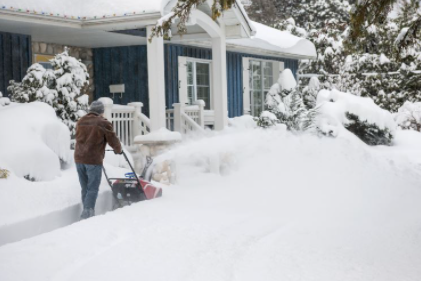
Winter officially arrives on December 20 and Americans should expect to spend more to heat their homes than last year.
The U.S. Energy Information Administration predicts home heating costs will go up because fuel prices are rising, and demand has increased over the previous winter. The good news is that recovery since the depths of the COVID-19 economic decline is driving the trend. But it still won’t help households struggling to make ends meet cope with a jump in heating costs.
It’s another reminder that, especially during periods where all sources of energy are seeing price increases, energy diversity in the marketplace is the best strategy for consumer choice, safety, and cost control.
Federal officials say homes that heat with natural gas will pay as much as 30 percent more this winter – with an average cost of $746 to make it through the cold months. But households using all fuels are expected to see increases. While electric heat is expected to increase at a more modest rate—the cost of electricity already leaves many families little wiggle room in their budgets. The Energy Information Administration says homes that rely on electric heat will spend a whopping $1,268 on their electricity bills during the winter season.
Homes that rely on heating oil, meanwhile, will pay about 43 percent more this winter. And propane fuel users will pay more than 1.5 times what they did last year to heat their homes, according to the EIA.
“Tough winters and challenging economic cycles really demonstrate how important it is for consumers to have access to clean, safe natural gas and all other sources of fuel,” says Karen Arpino, Executive Director of the Northeast Hearth, Patio and Barbecue Association. “There is a role for all sources of energy in providing consumer choices and real diversity in the types of fuel that are available.”
Advocates who are pushing to limit access to natural gas and other fuels while at the same time promoting all-electric homes do not have the best interests of the American household in mind.
“Imagine how much higher costs would be this winter if our energy choices were drastically limited? New natural gas furnaces are more than 90 percent efficient and 16 times less expensive than electric heating,” Arpino says. “All-electric homes are also less reliable and less safe during major weather events and natural disasters.”
NEHPBA is part of a coalition of organizations, individuals and industry groups fighting natural gas bans and working every day to preserve true energy diversity. The association represents nearly 300 member companies – mostly individual retailers and service providers – that sell, install and service wood-fuel systems and provide expertise to consumers on primary and secondary home heating strategies .
“Americans have been through a lot over the past two years, and new challenges continue to emerge every day,” Arpino says. “Threatening to remove a family’s choice in how to meet a basic human need is outrageous. Our members will be there for their customers this winter, helping them get through it and make the most of their heating systems at a time of increased costs. And we will be there with them every day – fighting to maintain consumer choice and energy diversity.”
3 December 2021

The Vermont Climate Council passed an Action Plan on Wednesday by a vote of 19-4. The 273-page plan is part of the Vermont Global Warming Solutions Act which requires greenhouse gas emissions drop 26% by 2025 and 40% by the end of the decade. These are not goals, these are mandates and failure to meet these mandates is a violation of the Global Warming Solutions Act.
The thermal strategy is to ensure buildings use less energy while heating with more electricity. This means that 90,000 homes will need to be weatherized by the end of the decade-an increase of about 200%. The plan also requires a new “net zero” building code for new construction, efficiency standards for rental properties, and electric-only water heaters with modular demand response communication so the UTILITY companies can remotely control the water temperature. Also included in the plan is the creation of a Clean Heat Standard to incentivize heating companies to reduce their customer’s carbon emissions. Selling renewable liquid fuels, pellet stoves, and heat pumps would generate credits that fossil fuel wholesalers would be required to purchase.
As far as transportation goes, the plan uses incentives, taxes, and regulations to "persuade" Vermonters to buy and drive electric cars. By 2030, in order to meet the emission reduction mandates, 170,000 electric vehicles will need to replace gas-run vehicles. This is an increase of nearly 4000%. The plan allows for this by banning the sale of new combustion engine vehicles by 2035, giving cash incentives for electric vehicles and more fees to those who drive vehicles powered by gasoline and diesel. Additionally, even though MA, RI and CT have abandoned the Transportation Climate Initiative (TCI), VT has not. The plan calls on lawmakers to pass legislation that would allow the state to join the cap and trade program if it comes to fruition.
Governor Scott’s Administration released a signed statement disagreeing with many aspects of the plan. In the statement, Governor Scott said he “cannot support proposals which impose a fiscal commitment beyond the means of most Vermonters.” The electric stoves, cars, and heating systems that must be purchased in order to comply with the Global Warming Solution Act represent billions of dollars of new purchases. The Vermont legislature will pick up where the Climate Council left off in determining who pays the bill. The Legislature will start that process in January. NEHPBA will keep you updated!
Members of the Northeast Hearth, Patio & Barbecue Association (NEHPBA) and its regional Affiliates are the leading companies that produce, sell, or service appliances and accessories in the hearth and barbecue industries in North America. Join today to take advantage of all the benefits your company will receive.
JOIN NOWServicing Massachusetts, Connecticut, New Hampshire, Rhode Island, Vermont, Maine, New York
Copyright © 2025. Northeast Hearth, Patio and Barbecue Association | All rights reserved.